Why noise is the quiet deal breaker in luxury hotel dining
In high end hospitality, intrusive noise has become the most underestimated luxury failure point. When a dining room pushes sound levels toward the average restaurant noise level of 80 decibels, conversation strains, palates tire and even a flawless plate feels oddly flat. Studies from organizations such as the American Speech-Language-Hearing Association and the World Health Organization indicate that sustained exposure above roughly 70–75 dB makes speech comprehension difficult and contributes to fatigue, which is why guests now judge a hotel as much by its room acoustic comfort as by its wine list, because acoustics shape every second of the dining experience.
For gastronomy focused hotels, hotel dining room acoustic design is no longer a backstage technicality. General managers track complaints about noise as closely as they track RevPAR, because those comments quietly erode guest experience scores and repeat bookings. The smartest hotels work with acoustic consultants and interior designers as a single acoustics hospitality équipe, treating sound as a design material alongside marble, timber and light, and using measurable targets such as reverberation time (RT60), background noise criteria and target dB ranges during peak service to guide every decision.
Data driven owners have noticed that even a modest reduction in noise levels can transform the perceived value of a restaurant. When acoustic solutions such as sound absorbing panels, acoustic curtains and soundproofing furniture achieve a noise reduction in the region of 3–6 decibels—enough for guests to perceive a clear difference—patrons report longer stays and higher spend per head in post stay surveys. At London’s Sketch Lecture Room & Library, for example, a refurbishment that added concealed acoustic ceiling treatments and upholstered wall panels reportedly reduced average peak levels from around 78 dB to the low 70s and shortened mid frequency RT60 from roughly 1.1 seconds to about 0.7 seconds, with management noting fewer noise related comments and stronger dwell time. In a world where every square metre of restaurant space must perform, controlling sound is one of the most efficient ways to improve acoustics and elevate the overall guest experience, especially when combined with targets such as a mid frequency RT60 of around 0.6–0.9 seconds for comfortable dining.
The materials map: how surfaces, panels and ceilings tame sound
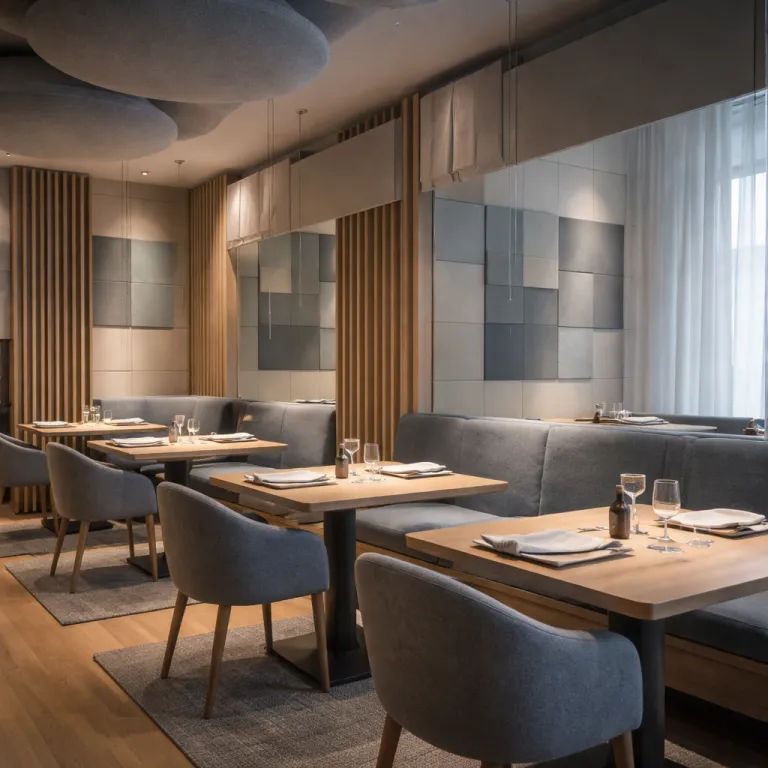
Walk into the most considered hotel dining rooms and your eyes and ears register calm before your brain does. The secret lies in how every surface, from ceiling to wall to banquette back, has been tuned for sound absorption without sacrificing visual drama. Instead of echoing marble boxes, you now find layered materials that turn hard areas into quietly performing acoustic elements, with designers checking absorption coefficients and Noise Reduction Coefficient (NRC) values as carefully as fabric swatches and stone samples.
Suede, velvet and textured linen wrap wall panels with hidden acoustic backing, softening reflections while keeping a refined hospitality aesthetic. Perforated timber screens break up sound waves between tables, while acoustic wall treatments behind artworks double as gallery and engineering in one gesture. Overhead, an acoustic ceiling with carefully spaced ceiling tiles and concealed acoustic solutions in coffers allows the restaurant design to stay sculptural while the room acoustic stays controlled, often supported by high performance insulation and discreet baffles above the visible ceiling plane.
This is where hotel dining room acoustic design has moved far beyond sticking a few panels on a wall. Acoustic design now starts in the earliest sketches, with interior designers and acoustic consultants mapping noisy areas such as service stations, bar zones and open kitchens. At Park Hyatt Vienna’s The Bank Brasserie & Bar, for instance, the design team used a combination of acoustic ceilings, fabric wrapped panels and sound absorbing banquettes to create distinct sound zones, cutting reverberation from about 1.3 seconds to under 0.8 seconds in the main dining area while keeping the bar livelier. The best hotels use a series of materials and acoustic ceiling strategies to create pockets of intimacy within a single dining room, so a working breakfast, a tasting menu and a late night drink can all share the same space without competing noise levels, and they cross check these layouts against target sound pressure levels and speech privacy goals.
Light, air and ergonomics: the invisible trilogy behind a great dining experience
Silence alone does not make a memorable dining experience, and luxury hotels know it. The same precision that goes into room acoustic planning now extends to tunable lighting, invisible ventilation and chair ergonomics, all working together to support the guest experience over several hours. In the best hotels, you feel this orchestration rather than notice it, because nothing calls attention to itself and every technical choice, from diffuser placement to chair glide selection, is made with comfort and sound in mind.
Lighting acts as a service course, shifting almost imperceptibly from a crisp glow at breakfast to a candle like amber by dinner. This change in the dining room atmosphere works with the acoustic elements, so lower sound levels and warmer tones encourage guests to linger without fatigue. When you read about designing for the plate rather than the lobby, this is what it means in practice, and it is explored in depth in guides to how hotel dining rooms quietly replaced the lobby as the true stage of hospitality, with lighting designers, chefs and acoustic specialists now often sharing the same project brief and coordinating dimming curves with target sound levels.
Air quality is handled with the same discretion, using integrated purification systems hidden in cabinetry or ceiling reveals so there is no intrusive hum to add to background noise. Ergonomic chairs with soft upholstery, correct seat angle and generous spacing between tables reduce the micro movements and scraping sounds that can sabotage even the best acoustic solutions. For business leisure travelers extending a work trip, this combination of controlled sound, flattering light and physical comfort turns a hotel restaurant into a credible setting for both a focused breakfast meeting and a romantic dinner in the same area, without the fatigue that comes from harsh lighting, stale air or constant clatter.
From hotel rooms to dining rooms: what business leisure guests should listen for
Executives used to obsess over hotel rooms and their soundproofing, but the new frontier is the dining room where deals are sealed and relationships are built. When you book through a luxury gastronomy platform, you should evaluate hotel dining room acoustic design with the same rigor you apply to Wi Fi speed or mattress quality. The right restaurant space can extend your working day gracefully, while the wrong one turns every meal into a shouting match and leaves you drained before the next meeting.
Start by asking how the hotel manages acoustics hospitality wide, not just in one flagship restaurant. Properties that take sound seriously will mention acoustic ceiling strategies, sound absorbing materials and specific acoustic solutions such as wall panels or ceiling tiles rather than vague promises about a quiet room. They will also be transparent about working with specialist acoustic consultants and interior design companies, because “Why are hotel dining rooms focusing on acoustics? To enhance guest comfort and satisfaction.” and to align with recognized benchmarks such as recommended NC (Noise Criterion) ratings for premium dining spaces and WHO guidance on comfortable indoor sound levels.
During your stay, pay attention to how different areas perform at different times of day, from breakfast service to late night drinks. In well designed hotels, you will notice that noise levels remain controlled even when the restaurant is full, thanks to sound absorbing furniture, acoustic wall treatments and thoughtful restaurant design that separates high energy bar zones from calmer dining areas. For travelers who care about both palate and productivity, these details in acoustic design are as critical as the chef’s sourcing philosophy or the wine cellar depth, and they should influence every booking decision you make on gastronomy focused platforms such as the curated guides to unique culinary hotel experiences, especially when you rely on those venues for confidential conversations.
Best in class examples: where acoustic luxury quietly earns its premium
Across the global hospitality landscape, a new series of gastronomy focused hotels has adopted advanced acoustic treatments as a core part of their identity. These properties treat hotel dining room acoustic design as a signature, not a backstage fix, and they invest in acoustic elements with the same seriousness as in marble bars or chef’s tables. The result is a guest experience where you remember the conversation as clearly as the dessert, and where online reviews mention “calm atmosphere” and “easy conversation” as often as “excellent tasting menu.”
In these hotels, restaurant design begins with a detailed acoustic design brief that maps every area of the dining room, from open kitchen to corner banquette. Acoustic panels are integrated into sculptural wall panels, acoustic ceiling coffers and even custom sound absorbing artworks, so the space reads as pure design while the acoustics quietly work in the background. Methods such as installing acoustic curtains and integrating soundproofing furniture are used alongside more architectural moves, creating layered acoustic solutions that improve acoustics without visual compromise, and that can be documented with before and after sound level readings and reverberation measurements.
Owners report that once these measures are in place, complaints about noise drop sharply and positive reviews about the overall dining experience increase. At properties such as The Ned in London and Grand Hyatt Hong Kong, post refurbishment acoustic reports have shown reductions of 4–7 dB in peak dining periods and RT60 values brought into the 0.6–0.9 second range in key restaurant spaces, correlating with higher guest satisfaction scores and more frequent mentions of “quiet” and “comfortable” in reviews. Guests may not know the technical term room acoustic or sound absorption, but they feel the difference when sound levels stay comfortable even at peak service. For a business leisure traveler choosing between hotels in the same price area, that calm, controlled restaurant space often becomes the deciding factor, proving that in modern hospitality the most luxurious upgrade is sometimes what your eyes and ears barely register at all, yet what your body remembers as restorative rather than exhausting.
FAQ
Why are hotel dining rooms focusing so much on acoustics now ?
Luxury hotels have learned that excessive noise in a dining room directly damages guest satisfaction, even when food and service are strong. With average restaurant noise levels often reaching around 80 decibels, controlling sound through acoustic design, sound absorbing materials and careful restaurant design has become essential to protect both conversation and overall guest experience, and to align with emerging best practice guidelines on comfortable sound levels for premium dining.
What materials work best to reduce noise in hotel restaurants ?
The most effective acoustic solutions combine several materials, including upholstered wall panels in suede, velvet or textured linen, perforated timber, acoustic ceiling tiles and sound absorbing furniture. When these elements are integrated into the overall design of the space, they improve acoustics significantly without compromising the visual identity of the restaurant, especially when products with high NRC ratings and appropriate fire and hygiene certifications are selected.
How can I tell if a hotel restaurant has good acoustic design before booking ?
When researching hotels, look for mentions of acoustic panels, acoustic ceilings, soundproofing furniture or collaboration with acoustic consultants and interior designers. You can also contact the property directly and ask whether the dining areas have been treated to manage noise levels, especially if you plan important business meals or long tasting menus, and whether they aim for specific decibel ranges or reverberation times during peak service.
Do acoustic improvements really change the dining experience that much ?
Even a modest reduction in sound levels can make conversation easier, reduce fatigue and encourage guests to stay longer. Hotels that invest in room acoustic treatments, acoustic wall solutions and thoughtful restaurant design often see fewer complaints about noise and more positive reviews about the overall dining experience, with some reporting measurable increases in dwell time and secondary spend once reverberation and background noise are brought under control.
What should business travelers prioritize when choosing a hotel for quiet meals ?
Business travelers should prioritize hotels where the dining room offers controlled sound levels, comfortable seating and flexible lighting that suits both meetings and relaxed dinners. Asking about acoustic design, sound absorbing materials and how different areas of the restaurant are zoned will help you select a property where your meals support, rather than strain, your work and leisure time, and where the acoustic environment is treated as seriously as connectivity, bedding and culinary credentials.