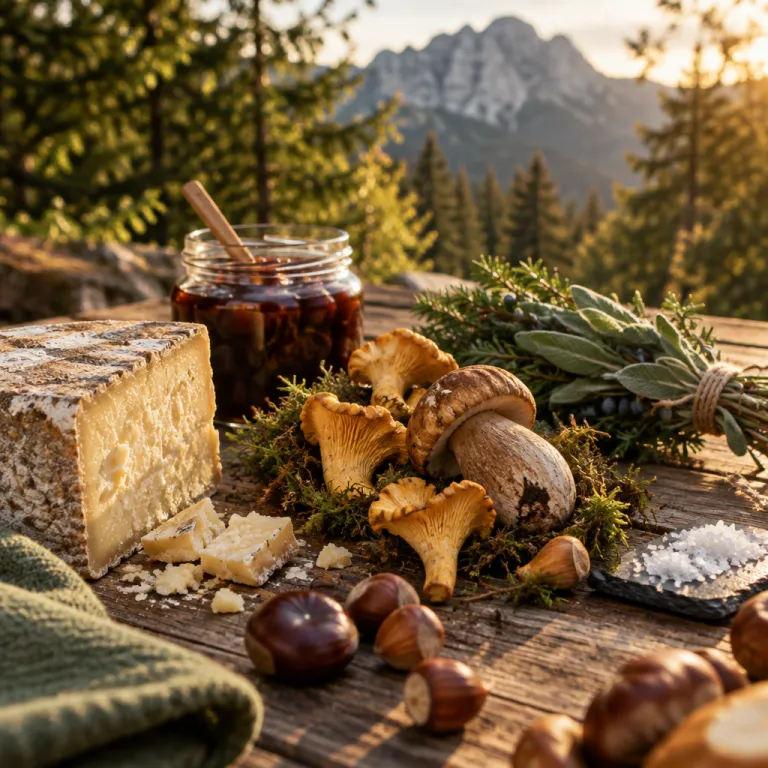
The October mountain kitchen: when the larder is at full voice
October in a high-altitude gastronomy hotel is not a consolation prize between summer hikers and winter skiers. It is the moment when the kitchen finally has everything it has been quietly preparing since the first thaw, and the chef can move from preservation mode to performance. In the right alpine retreat, you taste the entire year in one plate.
Across the Alps and other ridge mountains, the last wild porcini and chanterelles arrive at the pass while the first venison and chamois appear on the menu. A serious resort kitchen will have spent the warm months smoking, curing and fermenting, so that by autumn the larder is lined with jars of preserved berries, pickled vegetables and smoke-cured charcuterie at peak maturity. This is when an October mountain dinner can move from a bright, herb-driven first course to a deep, game-rich main without ever leaving the same slope.
Walk out from the hotel into the forest and you see the logic of the plate. Red-orange foliage, golden larch needles and a blue sky over the ridge create fall scenery that mirrors the colours of the dishes. For guests who enjoy both hiking and long lunches, this is the best time to move between trails and the dining room, letting the crisp air sharpen your appetite before you return to the hot tub and a glass of something alpine and mineral.
In the most focused properties, the chef literally walks the mountain before writing tomorrow’s courses. At places like St. Hubertus in San Cassiano or Restaurant Stüva in Ischgl, the menu changes with what the team finds along the trails, from late-season thyme on a south-facing ridge to bilberries that have survived the first frost in a sheltered corner of the forest. When you travel in autumn and choose a hotel that lives this rhythm, you are not just booking a room; you are reserving a seat at the final, most complex chapter of the mountain year.
Reading the alpine menu: how to tell if the mountain is really on your plate
Choosing the right October stay in a gourmet mountain hotel starts with reading the menu as carefully as you read the room categories. A credible alpine kitchen will be transparent about wild versus farmed game, about which herbs are foraged and which are cultivated in a garden near the hotel. When the language feels vague, the cooking often is too.
Look for specific references to the local ridge mountains, to nearby national park hunting grounds and to named producers in the valley below. In the Dolomites, for example, a menu that lists chamois from the Fanes-Sennes-Braies area or cheese from a single alpine pasture above Alta Badia signals a sourcing philosophy, not just decoration. The best properties explain how altitude shapes their techniques, from slow smoking in thinner air to fermenting vegetables at cellar temperatures that shift subtly between summer and fall.
Authentic mountain gastronomy in autumn leans into preservation rather than pretending it is still high summer. Expect venison aged carefully beside smoke-cured pork, served with fermented cabbage, preserved berries and potatoes roasted in butter from cows that grazed the high trails. When you see golden larch, wild mushroom pickles and forest herbs appearing together, you know the kitchen is cooking the season, not a generic alpine fantasy.
For business-leisure travelers extending a trip, this level of detail matters as much as thread count. You might spend the morning on gentle hiking trails or even biking routes that start at the resort door, then return to a dining room where the same landscape appears on the plate. If you are planning a wider food-focused journey, it is worth reading long-form destination pieces such as a refined foodie Savannah escape for luxury gastronomy stays, then applying the same critical eye to any mountain hotel you consider.
Why October is the quiet, golden month for luxury mountain stays
From a purely practical perspective, October is the best time for a high-mountain culinary booking. Peak ski weeks are still distant, summer crowds have gone and rates in many luxury properties soften without any drop in kitchen ambition. You gain quieter dining rooms, more attentive service and a chef who finally has time to talk you through the larder.
Outside, the mountains are in full fall scenery mode, with red-orange slopes, golden larch stands and a blue sky that feels almost over-saturated. Hiking in this light is different; the air is cooler, the trails are less crowded and you can move from ridge to forest without overheating. Many guests combine hiking and biking days, using both walking paths and cycling trails that weave through national park terrain, then return to the hotel to enjoy a long, unhurried dinner.
For a business traveler turning a meeting into a long weekend, this shoulder-season logic is compelling. The best time to negotiate a suite upgrade or a late checkout is often when the resort is not at full winter capacity, and October fits that pattern perfectly. Thoughtful analysis of this dynamic appears in guides to the shoulder season at a gastronomy hotel, which show how price, peace and plate quality intersect once the high-season noise fades.
There is also a sensory argument for October that goes beyond spreadsheets. Sitting in a hot tub on a terrace while the ridge mountains glow in red-orange and gold, then moving inside for a menu built around game, mushrooms and preserved vegetables, is a complete experience. When you choose a hotel that understands this autumn mountain rhythm, you align your stay with the moment when both nature and the kitchen are in balance.
From the Alps to the Blue Ridge: where mountain gastronomy hotels excel in autumn
The Alps and the Jura have become the most interesting addresses for serious October food-focused escapes. Michelin attention has shifted steadily uphill, rewarding properties that build entire identities around a tight sourcing radius above the tree line. In these alpine resorts, the dining room view and the plate compete for your attention, and both usually win.
In Switzerland and France, you now find hotels where the chef’s day starts with a walk across the mountain rather than a call to a wholesaler. At places like Hotel Walserhof in Klosters or La Bouitte in Saint-Martin-de-Belleville, teams move along trails that cut through forest and pasture, checking on wild herbs, late berries and the condition of the game hanging in the aging room. The result is a cuisine where every element, from the smoke on the charcuterie to the acidity of the fermented vegetables, reflects altitude, climate and the specific ridge that shelters the property.
Across the Atlantic, the Blue Ridge Mountains offer a different but equally compelling autumn script. Here, national park landscapes, blue haze over the ridge mountains and long, flowing hiking trails create a softer, more pastoral backdrop for serious cooking. A few ambitious hotels, such as the Inn at Little Washington near Shenandoah National Park or Blackberry Farm in the foothills of the Great Smoky Mountains, have started to treat the Blue Ridge as an American alpine, building menus around local farms, forest foraging and the kind of fall scenery that makes even a short stay feel like a full reset.
For travelers who enjoy both travel efficiency and sensory depth, this opens interesting itineraries. You might spend a week moving from an alpine resort in the European Alps to a property in the Blue Ridge, comparing how each kitchen handles game, mushrooms and preserved produce. Along the way, use specialist resources such as guidance on using an official hotel phone number for a refined stay in Gothenburg to refine how you communicate with properties, ask about their autumn programmes and ensure that your October reservations align with the season’s strengths.
How to plan an October mountain gastronomy stay that works like a tasting menu
Planning a high-altitude culinary trip is less about ticking off famous peaks and more about sequencing experiences like courses. Start by choosing one or two hotels where the kitchen is clearly the centre of gravity, then build your hiking, spa and travel logistics around their meal times. This way, the mountain becomes the supporting cast to the plate, not the other way around.
When you speak with the reservation équipe, ask specific questions about the autumn larder. Do they serve wild game from the surrounding mountains, or is it imported from lowland farms? Are the herbs and berries on the menu foraged from nearby trails and forest edges, or simply ordered in bulk? Clear, confident answers signal a property that takes its alpine identity seriously.
Next, match your daily rhythm to the landscape. Many guests like to hike in the morning, following ridge paths that offer wide views of red-orange slopes and golden larch stands, then return to the hotel for a late lunch and a long session in the hot tub. Others prefer gentle biking trails in the afternoon, followed by a tasting menu that stretches into the evening while the blue light fades over the ridge mountains.
Finally, remember that you can always skip content that does not serve your priorities. If a property talks more about conference facilities than its kitchen, it may not be the best time to book it for an autumn escape. Focus instead on hotels where every detail, from the wine list to the way staff describe the hiking and biking options, reflects a deep, confident understanding of how nature, altitude and season shape an exceptional October stay.
FAQ
Is October really the best time to stay in a mountain gastronomy hotel?
October is often the best time because the autumn larder is at its richest, with game, mushrooms and preserved summer produce all available. Rates are usually lower than peak ski season, and hiking trails are quieter while fall scenery is at its most dramatic. This combination of value, calm and culinary depth makes an October stay in a gourmet mountain hotel particularly rewarding.
What should I look for on the menu to judge authenticity?
Authentic mountain gastronomy menus clearly state whether game is wild or farmed and name specific local producers or nearby mountains. You should see preserved berries, fermented vegetables and smoke-cured charcuterie alongside fresh dishes, reflecting altitude-specific techniques. When a hotel’s menu reads like a geography lesson of the surrounding mountains, you are usually in good hands.
Can I combine serious hiking with fine dining during an autumn stay?
Yes, many luxury mountain hotels are located directly on or near established hiking trails and even biking routes. You can spend the morning on the mountain, then return to the resort for a long lunch or tasting menu that draws on the same forest and ridge you just explored. Planning your stay around both trail maps and restaurant reservations ensures you enjoy the full October mountain gastronomy experience.
How does a Blue Ridge stay compare with an alpine resort in Europe?
The Blue Ridge Mountains offer softer contours, blue haze and national park landscapes, while the European Alps feel steeper and more dramatic. Both regions now host hotels that take local sourcing seriously, using forest produce, fall colours and altitude to shape their menus. Your choice depends on whether you prefer European alpine traditions or an American interpretation of mountain gastronomy in autumn.
What room features matter most for an October mountain gastronomy trip?
For an autumn stay, prioritise a view of the ridge mountains or forest, a comfortable space to relax between meals and, if possible, a hot tub or spa access. These features let you enjoy the fall scenery even when you are not on the trails. Combined with a strong kitchen, they turn a simple hotel booking into a complete October mountain escape.